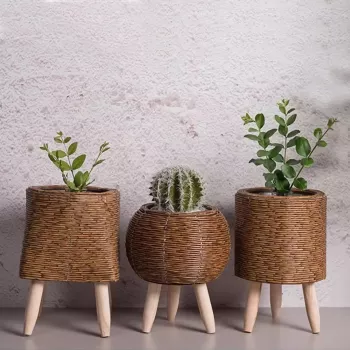
A vintage-style flower stand adds height, texture, and structure to indoor greenery without needing a full room refresh. This imitation rattan stand paired with wooden legs suits cozy, retro, and modern spaces alike—helping plants get better light while keeping surfaces clearer and décor more layered.
What This Flower Stand Brings to a Room
- Creates instant height variation so plants look intentional instead of crowded on the floor.
- Adds warm, woven texture without the care requirements of natural rattan.
- Pairs easily with wood, white, black, brass, and neutral textiles for a vintage-leaning look.
- Helps protect floors and tabletops by lifting pots and reducing contact with moisture rings.
That one “missing piece” in a plant corner is often simply a change in elevation. A stand turns a basic pot into a small focal point, especially when the plant is positioned near natural light. For lighting and placement basics, the University of Minnesota Extension has a helpful overview of indoor plant lighting.
Where It Looks Best
- Near a bright window: raises plants closer to light without blocking curtains.
- Entryway corner: a single taller plant on a stand makes the space feel finished.
- Bedroom nightstand alternative: a small plant elevated beside books or a lamp.
- Bathroom (well-ventilated): adds spa-like texture; keep pots dry underneath.
- Balcony or covered porch: works as a small accent stand for seasonal greenery.
Material Look: Imitation Rattan + Wooden Legs
- Imitation rattan delivers the woven appearance with a more uniform finish.
- Wooden legs add warmth and stability; visually lighter than an all-metal base.
- Works well with terracotta, ceramic, concrete, or simple plastic nursery pots placed inside a decorative cachepot.
- A woven stand reads “soft” and “homey,” balancing sharp-lined furniture.
The woven look is especially useful in rooms dominated by smooth surfaces (glass tables, painted cabinets, flat-front dressers). It breaks up the “hard” lines without feeling busy. For everyday plant care, including avoiding soggy soil and overwatering, the Royal Horticultural Society’s guide to watering indoor plants is a solid reference.
Sizing and Plant Pairing Guide
- Match the stand’s top area to the pot’s base so the pot sits centered and steady.
- Choose trailing plants (pothos, ivy, string-of-pearls) to highlight height and drape.
- Choose upright plants (snake plant, ZZ plant, small ficus) for a clean, sculptural look.
- If the pot has a drainage hole, place a saucer inside the pot or use a waterproof liner to avoid drips.
Quick pairing ideas by plant style
| Plant type |
Why it works on a stand |
Styling tip |
| Trailing vines |
Shows off the elevated height and creates movement |
Let vines cascade; keep the stand slightly off the wall |
| Upright foliage |
Looks tidy and architectural |
Use a simple pot to emphasize the woven texture |
| Flowering plants |
Turns blooms into a focal point |
Place at eye level near seating for color impact |
| Herbs (indoors) |
Easy access for snipping and watering |
Group with a small tray to catch soil bits |
Simple Styling Setups (Room-by-Room)
- Minimal: one plant + one stand; keep nearby décor low so the plant stays the hero.
- Layered: pair the stand with a shorter pot on the floor and a framed print behind for a trio.
- Vintage vibe: combine with warm bulbs, thrifted books, and a textured rug.
- Modern contrast: use a matte white or black pot to keep the look clean and graphic.
- Seasonal refresh: swap the plant cover (basket/cachepot) or add a ribbon tag for holidays.
If you like a subtle holiday touch, a small ribbon or wrap can change the look without changing the plant. For an easy sparkle accent, consider a simple accessory like the Gold Glitter Scarf used as a soft wrap around a cachepot or tied as a decorative bow on a plant corner shelf.
Care and Maintenance
- Dust the woven surface regularly with a soft brush or microfiber cloth.
- Wipe spills quickly to help protect the legs and keep the weave looking fresh.
- Avoid prolonged pooling water under pots; use a saucer or liner.
- Keep out of constant direct rain if used outdoors; covered areas are best.
- Check the stand occasionally for wobble and re-seat the pot so weight stays centered.
If you’re trimming twine, cutting open soil bags, or tackling quick DIY plant organization, a small tool that cuts cleanly can help keep the area tidy—like the Multifunctional Metal Sheet Cutting Scissor for household tasks around the plant shelf (always use responsibly and store safely).
Small-Space Tips
- Use vertical height to free up floor area in studio apartments and narrow rooms.
- Place stands beside furniture legs (sofa, console) to make the layout feel cohesive.
- Create a plant “column” by using one taller stand and one shorter plant on a stool.
- Pick one main texture (woven stand) and keep other accessories smooth to avoid visual clutter.
At-a-glance details
FAQ
Can a flower stand be used with pots that have drainage holes?
Yes. Use a waterproof saucer or liner to catch runoff, and avoid letting standing water sit against the stand’s surface for long periods.
Will a woven-look stand fit modern décor, or only vintage rooms?
It fits modern spaces easily when paired with a simple matte pot and clean-lined furniture. The woven texture adds warmth while still keeping the look calm and minimal.
How do you keep a plant stand from wobbling?
Place it on a level surface, center the pot so the weight is balanced, and add thin felt pads under the legs if needed. Avoid top-heavy plants in undersized pots.
Recommended for you





Leave a comment