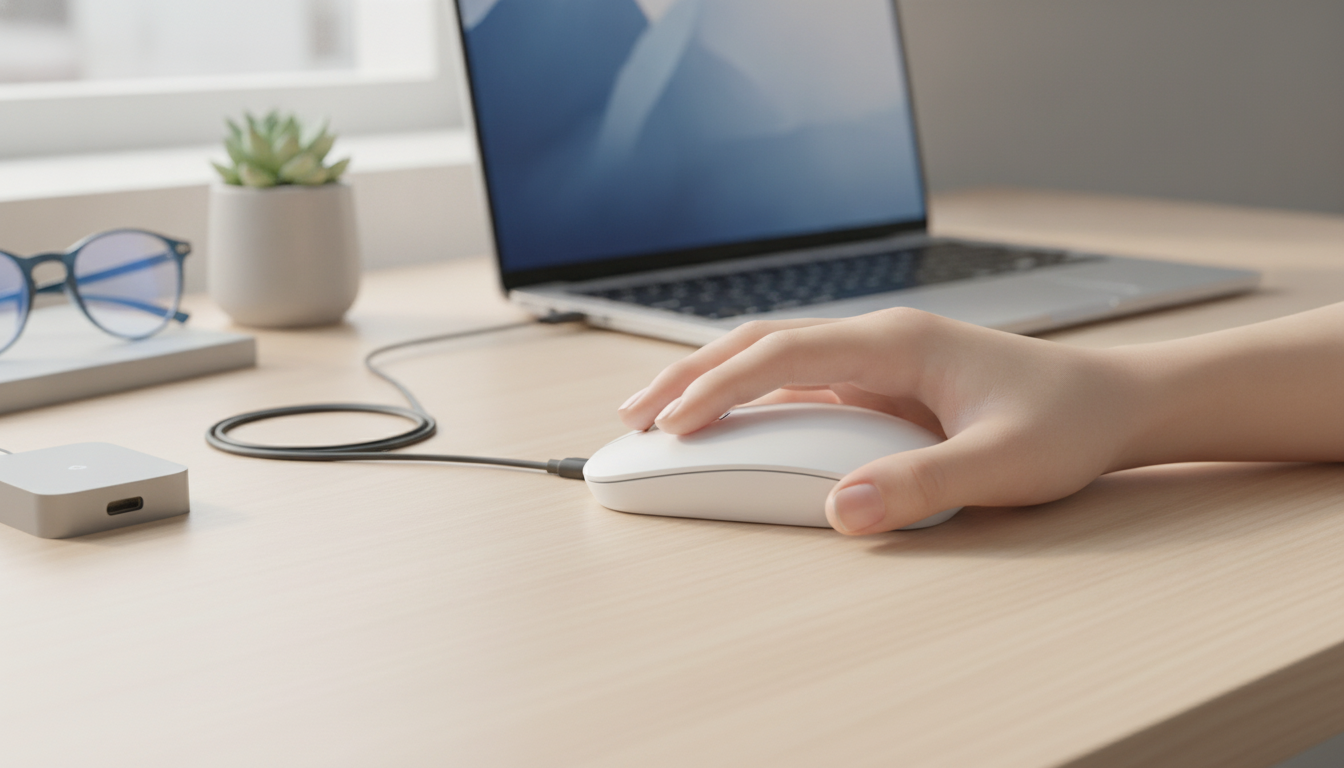
A rechargeable wireless mouse is a practical upgrade for home, office, and travel—reducing cable clutter and eliminating the need for disposable batteries. With the right connection type, a comfortable shape, and simple battery habits, a cordless mouse can feel just as reliable as a wired one while keeping your setup cleaner and easier to carry. For more guidance, see Amazon.com: TECKNET Wireless Mouse, BT 5.0/2.4G, ….
A cord-free mouse removes the tug and drag of a cable, which can make laptop workstations and small desks feel instantly less cramped. Because power is built in and rechargeable, there’s no need to keep buying AA or AAA batteries, and there’s less waste over time. For commuting, classrooms, libraries, or hot-desk offices, it’s also easier to toss a compact mouse into a bag and set up anywhere in seconds. For further reading, see Logitech Black Wireless Mouse with USB Receiver.
For day-to-day tasks—web browsing, email, spreadsheets, documents, and light creative work—most rechargeable wireless mice deliver smooth, predictable control. The biggest difference often comes down to comfort and connection preference, not raw performance.
A 2.4 GHz USB receiver is typically plug-and-play and works well on desktops or laptops with open USB ports. Bluetooth is convenient for tablets and newer laptops where ports are limited, and it avoids the tiny receiver that can be misplaced. Choose based on what you use most often and what ports you can spare.
For reliable tracking, look for a mouse that glides smoothly on typical desk surfaces. If movement feels inconsistent, a basic mouse pad can stabilize tracking—especially on glossy desks, glass, or patterned surfaces.
Comfortable clicks and a scroll wheel that doesn’t skip matter more than extra features for everyday productivity. If the mouse includes back/forward buttons, they can speed up browsing and document navigation without changing your grip.
USB charging is the most common and easiest to manage alongside existing cables. If you often work long hours, “use while charging” can be a helpful safety net—especially during busy days when you forget to top up.
Compact shapes travel well, while a larger shell can provide better palm support for extended sessions. If you work in shared spaces, quieter clicks reduce distraction without changing how you work.
For official system-specific steps and settings, the help pages at Microsoft Support and Logitech Support are useful references.
Comfort is the difference between a mouse that feels fine for ten minutes and one that still feels good after hours. Start by matching the mouse to your natural grip style:
| Feature | Rechargeable Wireless | Disposable-Battery Wireless |
|---|---|---|
| Ongoing cost | Lower over time | Higher over time (batteries) |
| Waste | Less battery waste | More battery waste |
| Travel convenience | Recharge with USB/power bank | Need spare batteries |
| Downtime risk | Can run low unexpectedly if not charged | Can swap batteries quickly if spares are available |
Battery life varies by battery size, sensor efficiency, and daily habits, but many users get anywhere from a few days to a few weeks per charge. Turning the mouse off during travel or long idle periods can noticeably extend runtime.
Many models can operate while plugged in, but it depends on the specific design. If continuous use matters, confirm the feature in the product details and test it with a stable USB power source.
Try moving closer to the receiver, switching USB ports, and reducing wireless interference from crowded USB hubs or nearby devices. A mouse pad can help, and cleaning the sensor window often fixes skipping on tricky surfaces; for Bluetooth, removing and re-pairing can also help.





Leave a comment