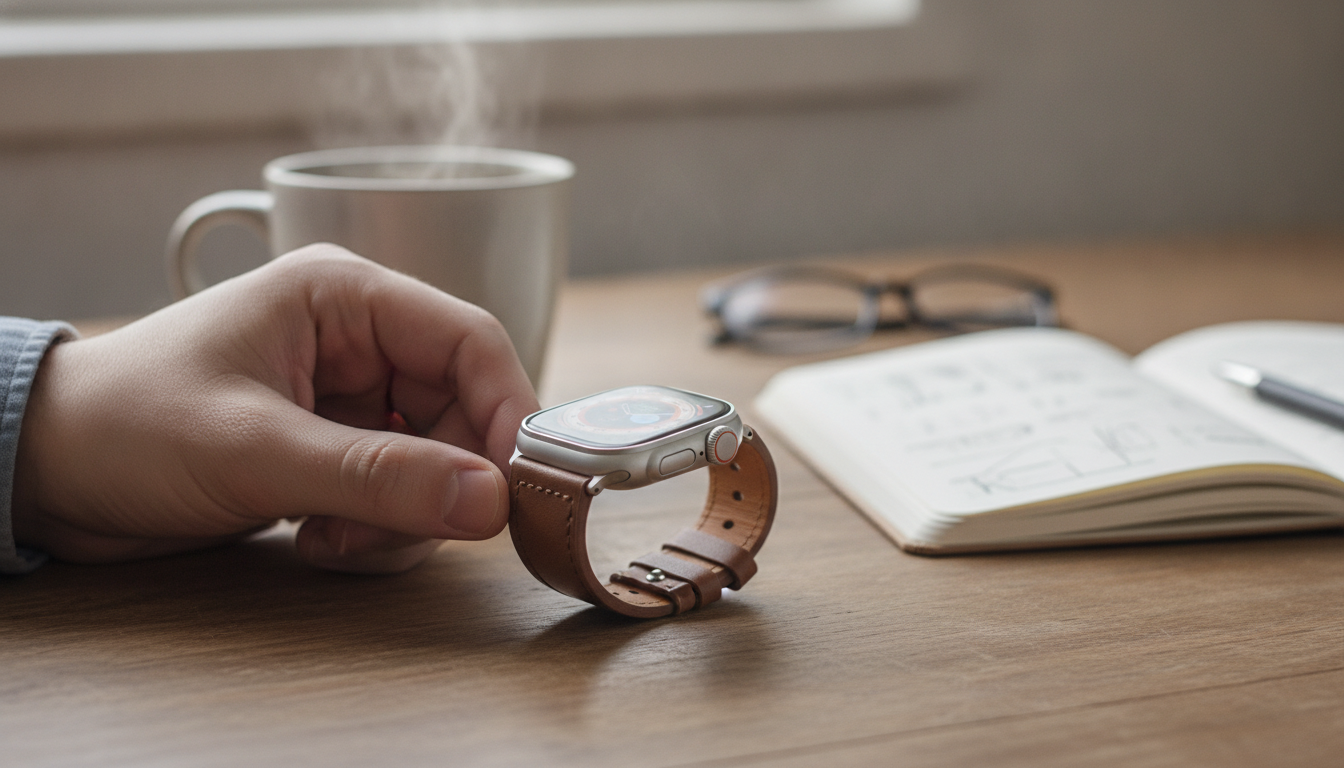
A leather strap can instantly shift an Apple Watch from sporty to refined while staying comfortable for all-day wear. The right band should feel secure, sit flat, and age in a way that looks better—not worn out. Below is a practical breakdown of what to look for: compatibility, sizing, materials, closures, daily comfort, and easy care habits that help leather keep its shape and finish.
Apple Watch hardware is sleek and modern, which is exactly why leather pairs so naturally with it. The contrast adds warmth without making the watch feel bulky.
The best leather strap in the world won’t feel right if it doesn’t match your case size group or wrist. Apple Watch bands are generally sold to fit two connector categories: 38/40/41 mm and 42/44/45/49 mm. The connector should slide into the watch channel smoothly and “click” into place without forcing it.
Also consider wrist circumference and strap length. A good leather fit is secure without feeling restrictive, and it shouldn’t ride up your arm when you type or move your hands.
| What to check | Why it matters | How to confirm |
|---|---|---|
| Case size group | Ensures the connectors align and lock securely | Look at the Apple Watch case size and match the strap’s supported size group |
| Wrist circumference | Prevents pinching or sliding | Use a soft tape; compare to strap length range if provided |
| Hole spacing / adjustability | Improves comfort across seasons | More holes and closer spacing = easier fine adjustments |
| Closure type | Affects security and ease of on/off | Buckle is classic; ensure buckle sits centered and flat |
| Daily conditions | Impacts longevity and look | If exposed to water/sweat often, plan for more frequent cleaning and drying |
“Genuine leather” can look and feel very different depending on finish, thickness, and construction. Small details show up fast on something you wear daily.
Leather changes slightly with use, and that’s part of the appeal—within a few days to a couple of weeks, it typically softens and follows the natural curve of your wrist.
For Apple’s official guidance on band handling and fit, see Apple Support — Remove, change, and fasten Apple Watch bands and Apple Support — Wear and care for Apple Watch.
Leather looks best when it’s kept clean and allowed to dry fully between wears. A simple routine goes a long way.
If you want a straightforward upgrade that looks polished without feeling flashy, the Premium Leather Strap for Apple Watch is an easy everyday pick. It pairs well with casual outfits and cleans up nicely for more formal settings, especially with a minimal watch face and neutral tones.
To complete a coordinated look, consider pairing it with a simple accessory like the Gold Glitter Scarf for evenings out or cooler days.
Leather can handle light activity, but heavy sweat and water exposure can shorten its life. Swapping to a sport band for workouts and returning to leather afterward is usually the most practical approach.
It should be snug enough for stable sensor contact without feeling restrictive. Aim for a fit that doesn’t slide around but still allows slight movement without leaving deep marks.
Wipe it with a soft cloth slightly dampened with water and let it air-dry fully; avoid soaking. If needed, use a leather-appropriate cleaner or conditioner sparingly and test on a small area first.






Leave a comment