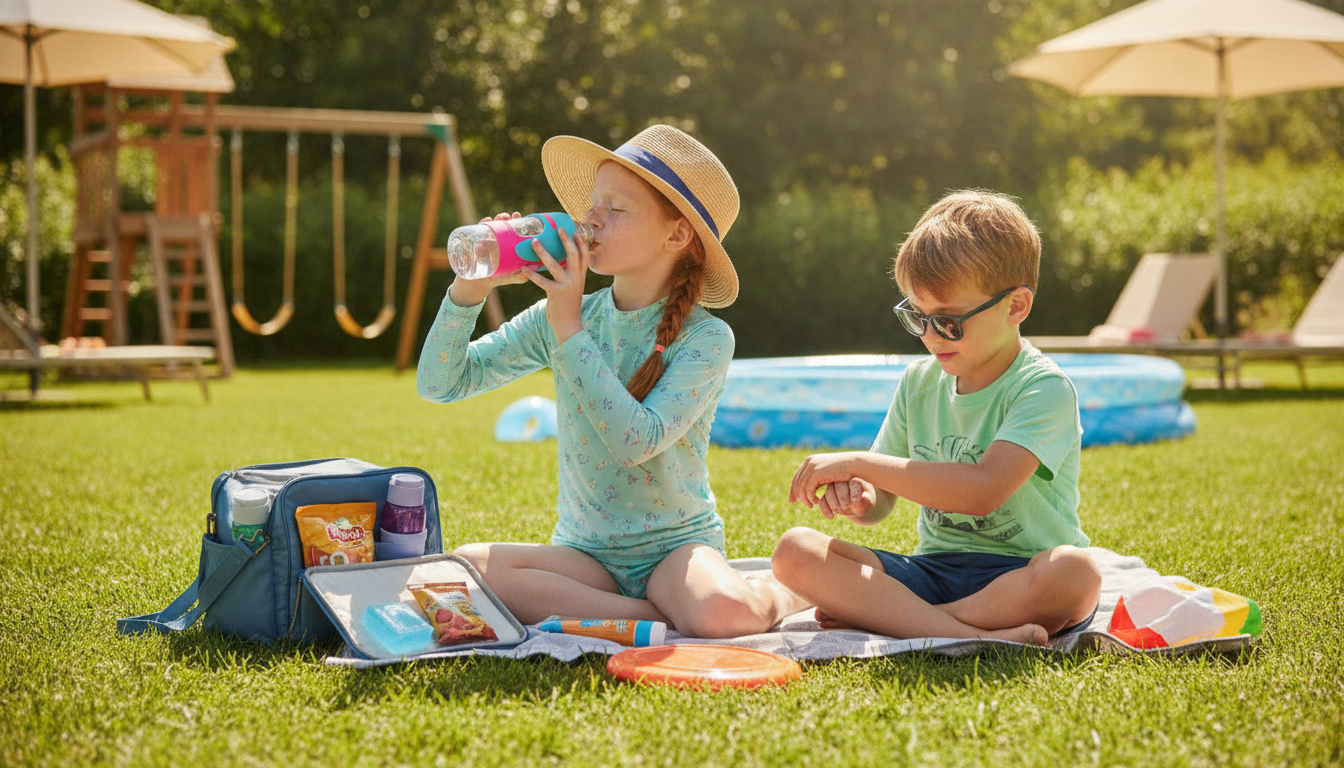
Hot weather can overwhelm kids faster than adults, especially during play, sports, and travel. A few repeatable routines—water before thirst, shade before “one more game,” and quick symptom checks—reduce risk without turning summer into a constant worry. Use the steps below to plan smarter outdoor time, protect skin, and spot early warning signs before they become emergencies.
Kids aren’t just “small adults.” Their bodies heat up quickly, and they may not notice early symptoms until they feel genuinely sick. During exciting outdoor play, thirst and sweating cues can lag behind what their bodies actually need—so waiting for a child to ask for a drink often means you’re already behind.
Babies and toddlers depend entirely on adults for shade, clothing choices, and regular fluids. Add humidity, direct sun, and hot surfaces (playground slides, car seats, asphalt), and risk rises fast. For a deeper overview of heat risk factors, see the CDC’s guidance on heat and children.
Make a quick “go/no-go” check part of the routine—especially for camp days, practices, or long park trips.
Hydration works best as a schedule, not a reminder. Start hydrated, then keep fluids steady with small, frequent sips.
| Time | What to do | Parent tip |
|---|---|---|
| Before leaving | Offer water (and a small snack if active play is planned) | Pack a cold bottle and a refill plan |
| During play (every 15–20 min) | Short drink break in shade | Use a timer or break at natural transitions |
| After play | Water + cool-down period indoors or in shade | Avoid rushing straight into a hot car |
| All afternoon | Steady sips with meals/snacks | Favor water; limit sugary drinks |
Sun safety sticks when it’s simple, comfortable, and consistent. Combine sunscreen with clothing and shade so you’re not relying on a single layer of defense.
Kids don’t want to “stop playing”—so build cooling into play itself.
If you’d like a skimmable, step-by-step resource you can keep on your phone, consider the Summer Heat Safety for Kids eBook.
For extra sun coverage on walks or outdoor events, a lightweight wrap can be handy for adults supervising kids—see the Gold Glitter Scarf as an easy-to-pack option.
Start with water at breakfast and again before going outside, then offer scheduled sips every 15–20 minutes during active play (more often in extreme heat or humidity). For long, very sweaty activities, add an electrolyte option or a salty snack, and follow pediatric guidance for infants.
Common early signs include headache, dizziness, nausea, weakness, heavy sweating, and cool/clammy skin. Move your child to shade or A/C, cool them with wet cloths, offer small sips of fluid, and seek care if symptoms don’t improve quickly.
Use broad-spectrum SPF 30+ sunscreen, apply before sun exposure, and reapply as directed—especially after swimming or sweating. Pair sunscreen with shade breaks, a wide-brim hat, UV-protective sunglasses (if tolerated), and lightweight or UPF clothing for better all-day coverage.





Leave a comment