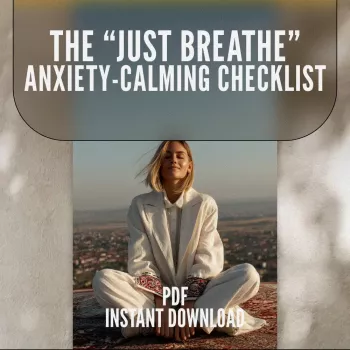
Anxiety can feel like it hijacks breathing—tight chest, shallow inhales, racing thoughts, and a sense that the moment is speeding up. A short, repeatable breathing routine can help the body downshift and create enough space to choose the next step. The The “Just Breathe” Anxiety-Calming Checklist digital download is designed to be saved to a phone, printed, or kept nearby for quick use at home, work, school, or while traveling.
This is a quick-reference, step-by-step calming sequence built around breathing patterns that are simple enough to follow under stress. Instead of trying to remember what to do while your mind is spinning, you pick a method, follow the count, then reassess.
Breathing is one of the most direct ways to influence how “revved up” the nervous system feels. Slow, controlled breathing can signal safety to the body and reduce the intensity of physical anxiety symptoms like rapid heart rate and muscle tension. Many people find that slightly longer exhales are especially settling, because the body often relaxes more on the exhale than the inhale.
Counting breaths also gives attention a single, structured task. That structure can interrupt catastrophic thinking loops and bring focus back to something concrete and measurable: this breath, then the next one. Perfection isn’t the point—missing a count is normal. The practice is noticing the moment you drift and returning to the next breath.
For more background on relaxation and stress responses, these references are helpful: NCCIH — Relaxation Techniques for Health and American Psychological Association — Stress effects on the body.
Different situations call for different pacing. If your heart is racing, starting with a gentle longer-exhale pattern can feel more doable than longer holds. If you’re in a crowded or public setting, choose a discreet method that doesn’t require audible breathing and keep the pace natural. At bedtime, slow the rhythm and dim screens if you’re viewing a checklist on a phone. If things feel panic-level intense, shorten the goal—aim for 60–90 seconds first, then reassess.
| Situation | What it can feel like | Breathing option to try | Timing cue |
|---|---|---|---|
| Sudden spike of anxiety | Chest tightness, shallow breathing | Extended exhale breathing | Inhale 4, exhale 6–8 for 1–2 minutes |
| Pre-meeting nerves | Jittery energy, restless hands | Box breathing (if comfortable) | 4–4–4–4 for 3–5 rounds |
| Overthinking at night | Mind won’t switch off | 4-7-8 style pacing (adjust as needed) | Up to 4 rounds; reduce counts if dizzy |
| Overwhelm in public | Sensitivity, urge to escape | Low-profile counted breathing | Count 10 slow breaths; restart if distracted |
| After an argument | Adrenaline, fast talking | Physiological sigh + slow breathing | 1–3 sighs, then 4/6 breathing for 2 minutes |
When anxiety is loud, simpler is better. This routine keeps the goal small: settle the body enough to regain choice.
If you want another set of breathing options to compare, the NHS guide to breathing exercises for stress is a practical reference.
Some people also like pairing breathing with a simple sensory anchor—something soft, warm, or textured you can touch while you count. If you prefer a wearable option, the Gold Glitter Scarf can double as a cozy, low-key grounding item when you’re on the go.
Find it here: The “Just Breathe” Anxiety-Calming Checklist | Breathing Techniques for Anxiety Digital Download.
The best technique depends on what feels steady and doable in the moment. Many people start with longer exhales or simple counted breathing, then try box breathing or 4-7-8 style pacing once the body feels a little calmer; adjust counts if you feel lightheaded.
Breathing can reduce intensity and help you regain a sense of control, but results vary. Aim for 60–90 seconds first, use longer exhales, add grounding, and consider professional support if panic is recurring.
Use it daily when calm for 1–3 minutes to build familiarity, then use it as needed during anxious moments. Repetition makes it easier to follow when stress is high.






Leave a comment