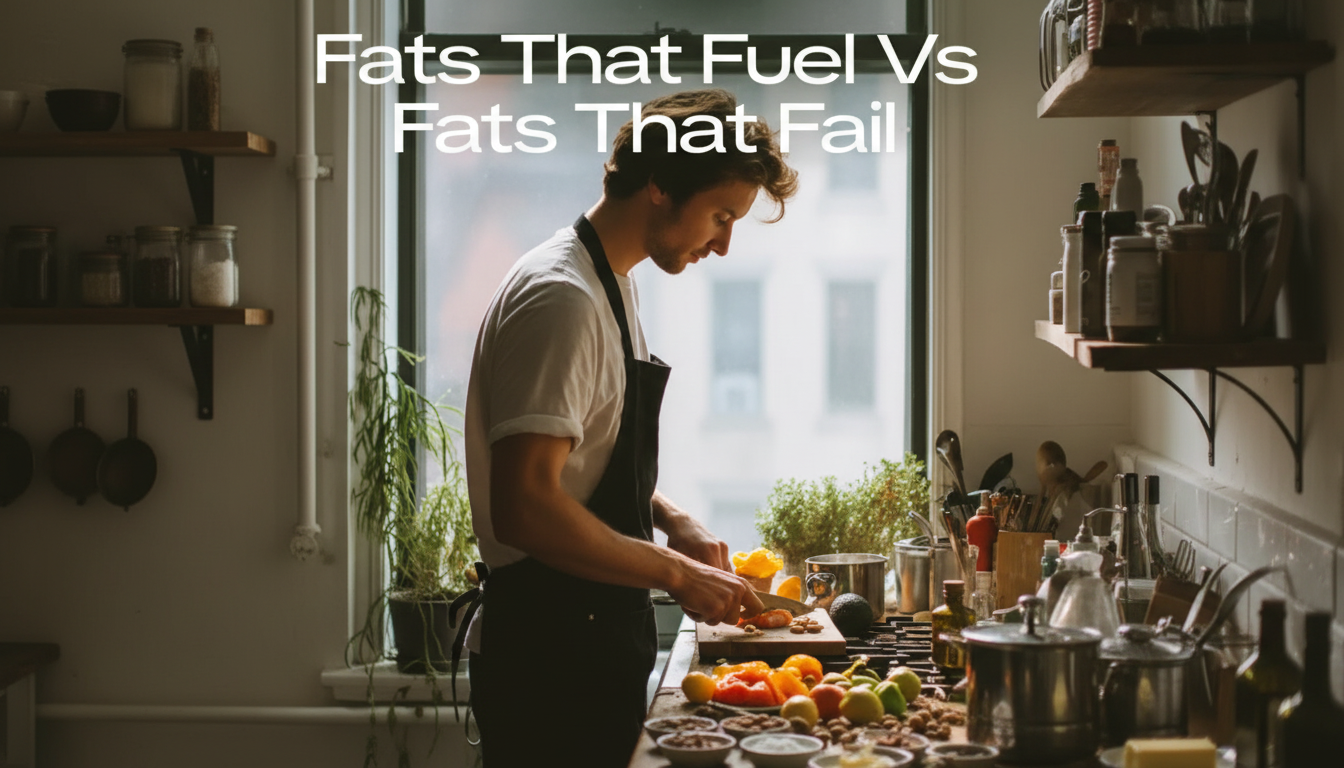
Dietary fat can support steady energy, brain and hormone function, and satisfying meals—or quietly stack the odds toward inflammation and poor heart markers when the wrong types dominate. The good news: you don’t have to turn every label into a math problem. With a few simple priorities, fat can work for your goals instead of against them.
Fat isn’t just “extra calories.” It plays real roles in how the body functions and how meals feel.
“Fuel” fats are typically unsaturated fats from whole foods and minimally processed oils. They’re the fats most often linked with better heart and metabolic markers when they replace saturated or trans fats.
Found in extra-virgin olive oil, avocados, and many nuts (like almonds and peanuts), monounsaturated fats are a practical everyday choice. They’re frequently associated with improved heart markers when used in place of saturated fats.
Polyunsaturated fats are essential—your body can’t make them, so they have to come from food.
Practical priority: Choose whole-food sources first (fish, nuts, seeds, olives). Use oils mainly for cooking and dressings rather than “adding fat” on top of an already-fatty meal.
Some fats are best minimized because they tend to worsen cardiovascular risk factors—especially when they come packaged with ultra-processed ingredients.
Use this as a quick decision tool for oils, spreads, and everyday staples. When possible, replace saturated or trans fat sources with unsaturated fats while keeping portions reasonable.
| Type | Common sources | What to do most days | Simple swap |
|---|---|---|---|
| Monounsaturated | Olive oil, avocado, almonds, peanuts | Use often | Butter on veggies → olive oil + herbs |
| Omega-3 polyunsaturated | Salmon, sardines, trout; chia/flax; walnuts | Aim for regular intake | Processed snack → walnuts + fruit |
| Omega-6 polyunsaturated | Seeds, nuts, many plant oils | Include in balance | Creamy dressing → tahini-lemon dressing |
| Saturated | Butter, cheese, fatty meats, coconut oil | Limit; choose leaner patterns | High-fat ground beef → leaner cut + olive oil finish |
| Industrial trans | Some baked/fried packaged foods with partially hydrogenated oils | Avoid | Packaged pastry → homemade oats/banana muffin with olive oil |
If you want a quick refresher you can revisit while shopping, consider Fats That Fuel vs Fats That Fail: A Guide to Eating Smarter – Healthy Fats vs Bad Fats Explained.
For practical meal prep that supports healthier cooking habits (like trimming, portioning, and prepping vegetables and proteins), a sturdy tool can help—see the Multifunctional Metal Sheet Cutting Scissor.
No—saturated fats aren’t automatically harmful, but many guidelines recommend limiting them and replacing them with unsaturated fats more often to support heart health. The overall food context and portion size matter a lot (for example, an occasional serving is different from saturated fat dominating most meals).
Industrial trans fats are created when oils are partially hydrogenated, and they’re linked to higher cardiovascular risk. Avoid them by scanning ingredient lists for “partially hydrogenated oils” and choosing minimally processed foods more often.
Rather than a rigid number, use portion cues: 1–2 tablespoons of oil with a meal, a small handful of nuts, and fatty fish regularly (such as a couple times per week) work well for many people. Your ideal amount depends on goals, activity level, and medical context.





Leave a comment