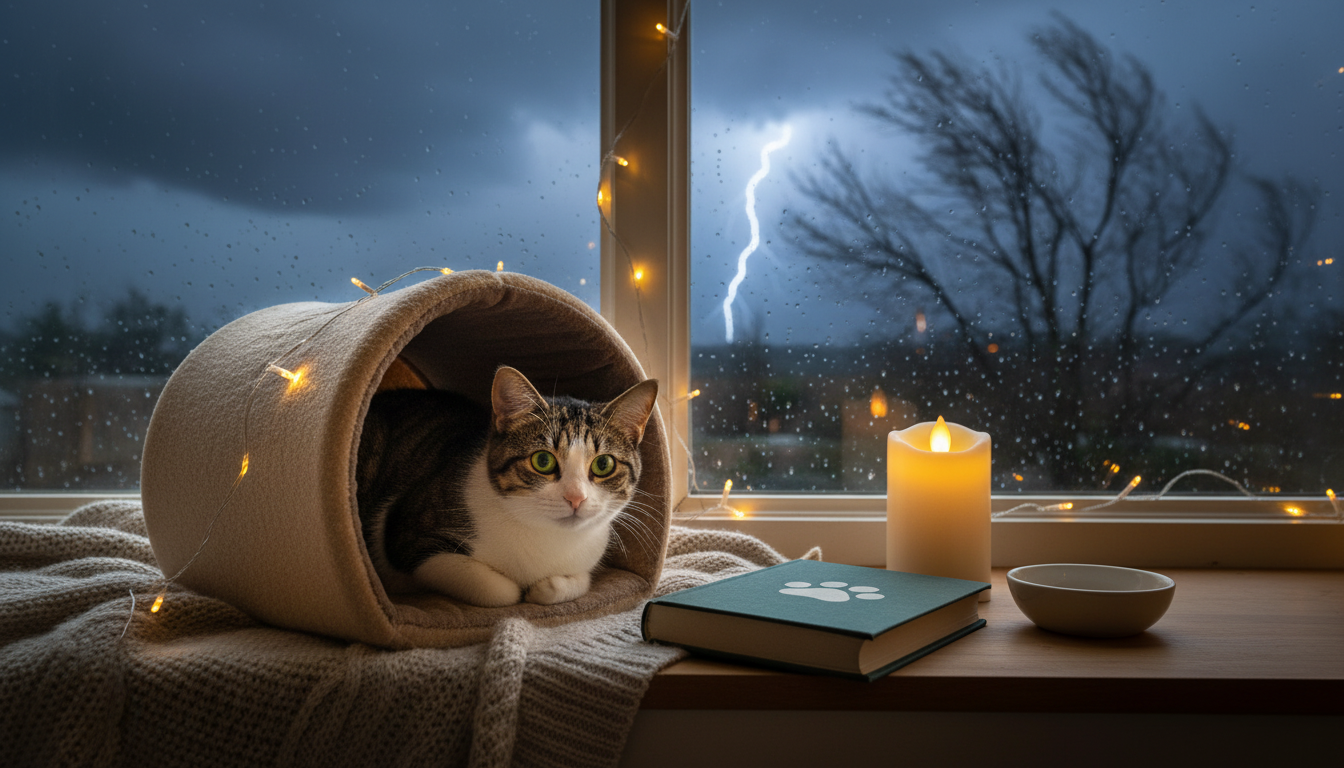
Thunderstorms can turn a normally relaxed cat into a frightened, hiding, vocalizing, or pacing bundle of stress. The good news: with a predictable plan, a few environment tweaks, and careful support, many cats learn to cope better over time. This guide breaks down what to do before, during, and after storms—plus when it’s time to involve a veterinarian—so calming your cat feels practical, not overwhelming.
Storm fear isn’t “dramatic behavior”—it’s a normal response to a situation your cat can’t understand or control.
Cats show fear in different ways. Watch for patterns that show up reliably with storms (or even before them).
Preparation reduces scrambling when the first thunderclap lands. The goal is to create a spot your cat can choose—without being trapped or forced.
If your cat prefers an enclosed “den,” keep a carrier out year-round with a blanket inside. For cats that relax under a light cover, a simple drape can help reduce flashes and movement at the doorway (always ensure airflow and an easy exit). Some households use a soft fabric cover like a lightweight scarf; for example, see Gold Glitter Scarf as a multi-purpose, packable option for covering a carrier or creating a visual barrier (avoid anything your cat chews or can tangle in).
During the storm, think “lower arousal, increase choice.” Your cat will cope better when they’re allowed to control distance and contact.
For more background on behavior concerns and when they cross into a welfare issue, these references are helpful: Cornell Feline Health Center, ASPCA Cat Care, and AAHA pet behavior resources.
| What’s happening | What your cat may do | What to do right now |
|---|---|---|
| First thunderclap | Bolts to hide, freezes, dilated pupils | Close curtains, add white noise, allow hiding, speak softly |
| Sustained rumbling | Pacing, panting, vocalizing | Guide access to safe room, reduce stimulation, offer lickable treat if willing |
| Lightning flashes | Startles, darts, swats if approached | Dim lights, block windows, avoid handling, sit nearby calmly |
| Storm lasts a long time | Restless, repeated attempts to escape | Refresh water/litter access, keep exits secured, use calm routine and minimal interruptions |
| After the storm | Overgrooming, clinginess, wary behavior | Keep environment stable, offer play later, resume normal schedule, consider long-term training plan |
If you want a structured checklist and troubleshooting help, consider Managing Cat Anxiety During Thunderstorms | Calm Your Cat with Confidence | Practical eBook Guide for cat anxiety at thunderstorms.
Comfort is fine if your cat seeks it and becomes calmer; avoid forced handling. Aim for quiet presence, a steady environment, and choices (distance, hiding, or gentle contact).
An interior, quiet, dim spot with soft bedding is usually best, ideally with easy access to water and a litter box. A covered carrier or a closet-area “den” can work well if your cat chooses it.
Yes. Repeated scary storms can sensitize some cats, making fear responses stronger. Early preparation, consistent routines, and gradual training can help, while severe cases may need veterinary or behavior support.







Leave a comment