
A compact 10,000mAh power bank with 25W USB-C Power Delivery is an easy upgrade for day-to-day iPhone life—fast enough to give you a meaningful boost during commutes, travel days, or long shifts, while still small enough to live in a bag or jacket pocket. The details matter, though: “25W PD” doesn’t mean your iPhone pulls 25W at all times, and a “10,000mAh” label doesn’t mean you’ll get 10,000mAh delivered to your phone.
Below is a practical breakdown of what to expect from a 25W PD power bank, how many charges you’ll realistically get, and how to keep fast charging consistent and safe.
USB-C Power Delivery (PD) is a smart charging standard that lets the charger and device negotiate a safe power level. In plain terms, it helps your iPhone (or iPad) pull the fastest rate it supports at that moment, rather than being stuck at slower, older USB charging speeds. Apple explains the basics of iPhone fast charging and compatible accessories here: Apple Support: Fast charge your iPhone.
A 25W PD output is built for quick top-ups. The exact wattage your iPhone draws varies by model, current battery percentage, and temperature. Fast charging is typically most noticeable from a low battery up to around 50–60%, after which charging tapers down to protect battery health and manage heat.
To get PD fast charging, the cable matters:
For a deeper look at the PD standard itself, the official overview is available from USB-IF: USB Power Delivery.
10,000mAh is a sweet spot for daily carry. It’s enough reserve to save you from a dead phone (often more than once) without the bulk and weight of larger packs. That said, usable energy is always lower than the rated capacity because the power bank must convert voltage and it loses some energy as heat. Planning around roughly 60–75% of the rated capacity is a realistic rule of thumb for what actually makes it into your device.
Charging speed depends on three things working together: the power bank’s PD port, a PD-capable cable, and the device’s own charging limits. If you plug into an older low-watt port or use a questionable cable, the phone may charge, but it likely won’t sustain the higher rates that make fast charging feel “fast.”
If you charge two devices at once, most power banks split output. That’s convenient for sharing, but it usually means slower charging per device compared to charging a single iPhone over the USB-C PD port.
| Device (typical battery size) | Approx. full charges (typical range) | Notes |
|---|---|---|
| iPhone (small/standard models) | 1.5–2.2 | Range varies with battery health, screen use while charging, and conversion losses |
| iPhone (Plus/Pro Max class) | 1.2–1.8 | Larger batteries reduce total full recharges from the same pack |
| iPad mini / small tablet | 0.6–1.0 | Tablets often accept higher wattage but also have much larger batteries |
| AirPods / small accessories | Many recharges | Small batteries mean a single power bank can last days for accessories |
For flights, most power banks must go in carry-on baggage (not checked luggage) and must be under common watt-hour (Wh) limits. A typical 10,000mAh power bank is well under 100Wh, which makes it a common travel-friendly size. The FAA guidance is a helpful reference for current rules: FAA: Portable Rechargeable Lithium Batteries.
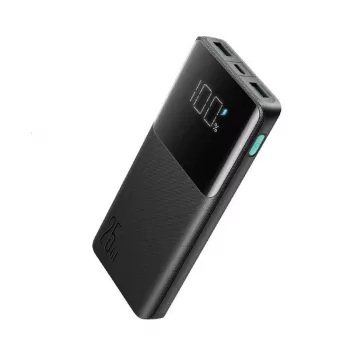
If you’re shopping for a compact fast-charging option, the 25W PD Fast Charging Power Bank 10000mAh for iPhone & Apple Devices is built around the two features that matter most for everyday carry: a portable 10,000mAh capacity and a 25W PD output for faster iPhone top-ups with the right cable.
| Item | Detail |
|---|---|
| Product | 25W PD Fast Charging Power Bank 10000mAh for iPhone & Apple Devices |
| Capacity | 10,000mAh |
| Max output | 25W (PD) |
| Price | $29.51 USD |
| Availability | In stock |
To round out a lightweight grab-and-go kit, a couple of other in-stock picks worth considering are the Gold Glitter Scarf for chilly commutes and the Multifunctional Metal Sheet Cutting Scissor for quick household fixes (useful when you’re organizing cables, packaging, or DIY tasks at home).
Yes, iPhones support fast charging over USB-C Power Delivery when you use a USB-C to Lightning cable (for Lightning iPhones) or USB-C to USB-C (for USB-C models). The iPhone will only draw what it can safely use, and charging typically slows after roughly 50–60% to control heat and protect the battery.
Many iPhone models will see about 1.5–2 full charges from a 10,000mAh class power bank, with larger Pro Max-style batteries often closer to 1.2–1.8. Actual results vary based on conversion losses, battery health, and whether you’re actively using the phone while it’s charging.
It can be safe when the power bank has standard protections (over-current, over-voltage, short-circuit, and temperature control) and you use a reputable cable. To reduce heat buildup, avoid covering the phone/power bank on bedding, and keep them in a ventilated spot so they can stay cool.






Leave a comment