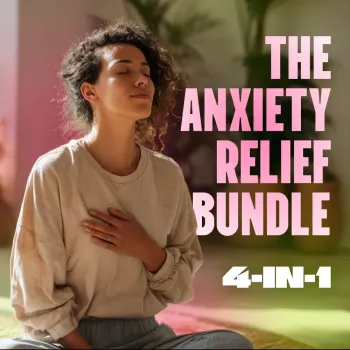
A calmer day often comes from small actions done consistently. The Anxiety Relief Bundle: A Path to Calm combines mindfulness exercises, positive-thinking prompts, a printable checklist, and a course outline into a structured set of tools designed to support steadier moods, clearer thinking, and more grounded daily routines.
Anxiety can show up as racing thoughts, tension, irritability, sleep disruption, and a feeling that you can’t fully “turn off” your mind. If you’re looking for a practical system—something you can repeat even when you’re busy—this bundle is built around short steps that are easy to start and easier to continue.
Think of it as a “calm-down pathway” you can follow when your brain wants to improvise the worst-case scenario. Instead of guessing what to do next, you rotate through a small set of tools that help your body settle and your thinking become more workable.
| Component | Best for | When to use | Typical time |
|---|---|---|---|
| Mindfulness exercises | Calming the body and attention | During anxiety spikes or daily practice | 2–10 minutes |
| Positive thinking prompts | Interrupting unhelpful thought loops | After a trigger, during reflection | 5–15 minutes |
| Printable checklist | Consistency and accountability | Morning/evening or after stressful events | 1–3 minutes |
| Course outline | Structure and progression | Weekly planning and skill-building | 10–20 minutes |
Starting matters, but restarting matters more. This 7-day ramp-up is intentionally light so it doesn’t become another task you feel pressured to “do perfectly.”
If you only do one thing this week, aim for a consistent cue (same time, same place). The brain learns faster from repetition than from intensity.
Mindfulness isn’t about forcing calm. It’s about giving your nervous system a repeated signal of safety—one moment at a time. If you want a trustworthy overview of how anxiety can affect mind and body, the National Institute of Mental Health (NIMH) guide on anxiety disorders is a helpful reference.
Positive thinking works best when it’s grounded. A realistic reframe doesn’t deny stress—it reduces the mental fuel that keeps it burning. For additional context on anxiety and coping, the American Psychological Association (APA) overview of anxiety is a solid starting point.
If you want an additional medical-system overview of generalized anxiety, the NHS page on GAD outlines common symptoms and support options.
Many people notice small early wins—like recovering faster after a stressful moment or feeling a slight drop in intensity—within the first few days. A consistent 1–2 week routine, with simple “before/after” tracking, makes changes easier to spot.
Yes. Start with very short sessions, choose one anchor (like the breath or feet on the floor), and treat distraction as normal—then gently return. Repetition matters more than doing it perfectly.
Yes, it can work as a supportive routine alongside professional care. For personalized guidance—especially if symptoms are intense or changing—check in with your clinician so the tools fit your overall plan.






Leave a comment