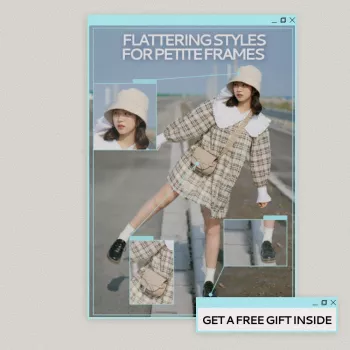
Petite style gets dramatically simpler when outfits are built around proportion: where the waist sits, how long hems land, and how much visual “break” happens from head to toe. The goal isn’t to look taller at all costs—it’s to look balanced and intentional. Below are outfit formulas, fit checkpoints, and quick tweaks that help everyday pieces (jeans, dresses, jackets, and workwear) feel like they were made for a petite frame.
These principles mirror what many fashion programs emphasize: design is as much about proportion and line as it is about trend. If you like a deeper fashion foundation, the Fashion Institute of Technology (FIT) is a widely recognized resource in the U.S. fashion world.
When you’re short on time, formulas remove guesswork. Start with one and swap colors or textures to make it feel like “you.”
| If a piece feels “off” | Try this swap | Why it helps |
|---|---|---|
| Blazer looks boxy | Choose a cropped blazer or one that hits high hip | Defines waist and avoids cutting the leg line too low |
| Wide-leg pants feel overwhelming | Pair with a fitted top + small-scale belt | Balances volume and creates a clear waist |
| Midi dress shortens the frame | Add a waist belt + low-contrast shoe | Restores proportion and reduces visual breaks |
| Skirt looks frumpy | Hem to just above knee or just below knee | Places the hem at a cleaner proportion point |
| Jeans bunch at the ankle | Hem to ankle bone or do a neat single cuff | Prevents stacking and keeps the silhouette sharp |
A simple accessory can do a lot of “finish” work. A subtle shimmer scarf like the Gold Glitter Scarf adds light near the face without adding bulk through the midsection.
Clothing choices can also affect how you feel moving through the day—confidence, posture, and presence included. The concept is studied in psychology as “enclothed cognition” (Journal of Experimental Social Psychology), which is one reason a well-balanced outfit can feel like an instant reset.
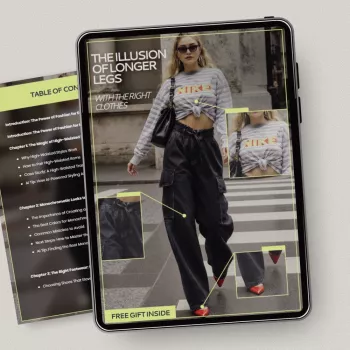
If you want a more plug-and-play wardrobe approach, Flattering Styles for Petite Frames – Ebook Guide to What Outfits Are Flattering for Petite People | Style, Fit & Proportion Tips organizes these ideas into easy outfit templates and fit cues you can reuse across seasons.
Styles with waist definition, higher rises, shorter jacket lengths, streamlined silhouettes, clean hems, and smaller-scale details tend to look balanced on petite frames. The most flattering outfits usually follow proportion (waist + hem + volume) more than strict “rules.”
No—heels are optional. Clean hems, low-contrast shoes, and pointed or almond toes can keep proportions smooth with flats, low block heels, or platform sneakers.
Choose a high-rise wide-leg with a tailored waist/hip and a lightweight drape, then pair it with a fitted top to balance volume. Keep the hem clean at the shoe (and hem if needed) so the silhouette looks intentional, not heavy.




Leave a comment