Warmth, Comfort, and Everyday Style with a Winter Cashmere Scarf
A well-made cashmere scarf is one of the simplest ways to stay warm without feeling bulky. Cashmere’s soft, airy insulation makes it easy to layer for commutes, weekend errands, and travel—while still looking polished indoors. Below is a practical guide to why cashmere works so well in winter, what to look for when choosing a scarf, easy ways to wear it, and the care habits that help keep cashmere smooth and long-lasting.
Why cashmere feels warmer without the bulk
Cashmere is known for warmth that doesn’t feel heavy. The fiber is naturally fine, so a scarf can deliver cozy insulation without the thick, stiff feel that some winter knits create.
- Fine fibers trap warm air efficiently: the structure holds heat close to the body while staying lightweight.
- Soft against the neck: cashmere tends to feel less itchy than coarser wool, which matters when it’s worn directly on skin.
- Breathable warmth: a cashmere scarf can help regulate temperature as you move between cold sidewalks and heated indoor spaces.
- Versatile styling: one scarf can move from casual to office to travel outfits with minimal effort.
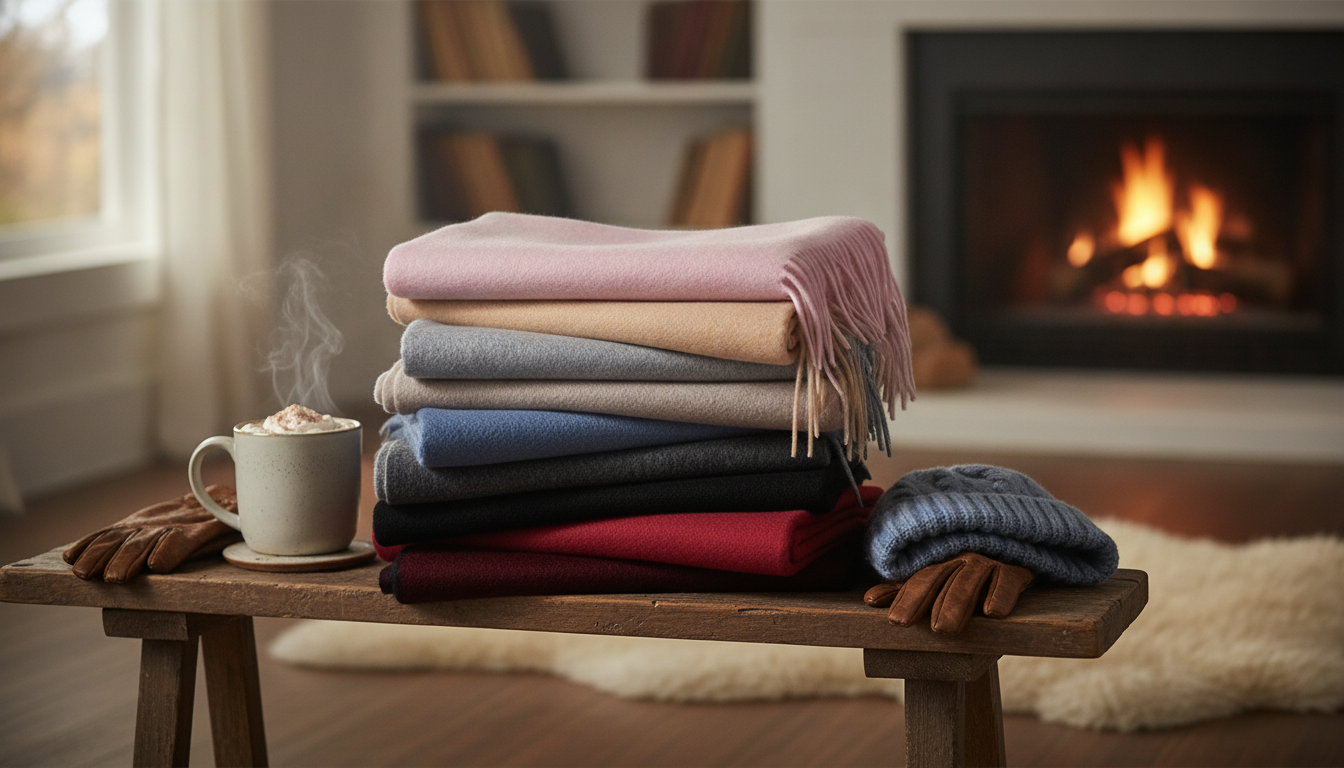
If you want an easy, reliable layer for day-to-day winter wear, the Winter Cashmere Scarf is a strong staple option for cold-weather rotation and gifting.
- Best for: daily layering, commuting, travel, and gifting
- Availability: in stock
- Price: $131.01 (USD)
- Care focus: gentle washing and air-drying to protect fibers and shape
Not all cashmere accessories feel the same. Construction and fiber quality influence how soft the scarf feels on day one, how it drapes, and how it holds up after repeated wears.
- Fiber quality: longer, finer fibers often pill less and maintain a smoother hand-feel over time.
- Ply and knit/weave: construction affects warmth and durability. Ultra-tight isn’t automatically better—look for a balance of structure and softness so it drapes well without feeling flimsy.
- Size and shape: longer scarves offer more wrapping options; wider styles can double as a light shoulder wrap when indoor spaces run cold.
- Finish details: consistent texture and clean edges suggest better manufacturing control and a more refined look.
- Comfort considerations: if you’re sensitive to itch, prioritize a scarf that feels comfortable directly against the neck and jawline.
For care and labeling guidance, it helps to review trusted references like Woolmark’s care instructions and the UK textile labeling guidance, which explains common care symbols and terminology.
Ways to wear it: practical wraps for real winter days
A great winter scarf earns its place when it’s easy to throw on without fuss. These wraps work well with parkas, wool coats, and lighter jackets—so you can adjust quickly when the weather changes.
- Classic drape: lay it around the neck with ends hanging evenly. It layers cleanly over a coat and avoids pressure around the throat.
- Once-around wrap: loop once, then let the ends fall forward. This is a fast option for commuting and quick errands, and it’s easy to loosen for breathability.
- Parisian knot: fold the scarf in half, place it around your neck, and pull the ends through the loop. It stays secure in wind and looks sharp with tailored outerwear.
- Over-the-shoulder wrap: widen the scarf and drape it across the shoulders like a light shawl—useful in chilly restaurants or offices without fully removing it.
- Travel blanket mode: fold it and place it over your lap or shoulders on flights, trains, or long drives for an extra comfort layer.
Care and storage: keeping cashmere soft season after season
Cashmere rewards gentle handling. The goal is to reduce friction, limit unnecessary washing, and keep the fibers supported as they dry.
- Wash sparingly: frequent washing can stress fibers. When possible, air out the scarf between wears and spot-clean small marks.
- Use cool water and gentle detergent: choose a wool/cashmere-safe formula and avoid harsh agitation that can felt or distort the fabric.
- Dry flat: press out water with a towel, reshape while damp, and lay flat to dry. Avoid hang-drying, which can stretch the scarf out of shape.
- De-pill gently: pilling can happen with natural fibers. Use a cashmere comb or fabric shaver lightly; don’t pull pills by hand.
- Store clean and dry: fold (don’t hang) and use moth-prevention methods for long-term storage, especially at the end of the season.
Pairing ideas for different wardrobes
More scarf options to round out your rotation
If you like switching textures for different occasions, keep a second scarf option on hand for events and dressier moments. The Gold Glitter Scarf is a lightweight, budget-friendly pick that can add shine for dinners, parties, and holiday plans—without replacing your warm winter staple.
FAQ
Does cashmere keep you warmer than wool?
Warmth depends on fiber diameter, construction, and how you layer. Cashmere is often warmer for its weight and typically feels softer on skin, while some wool weaves can be equally warm but may feel coarser.
How do you wash a cashmere scarf without ruining it?
Hand-wash (or use a delicate cycle) in cool water with a wool-safe detergent, using minimal agitation. Rinse gently, press out water with a towel, reshape, and dry flat away from heat or direct sunlight.
How can pilling be reduced on a cashmere scarf?
Pilling is normal with natural fibers, especially in high-friction areas. Reduce friction where possible, rotate wear, avoid rough coat fabrics at contact points, and remove pills with a cashmere comb or fabric shaver rather than pulling them off.
Recommended for you






Leave a comment