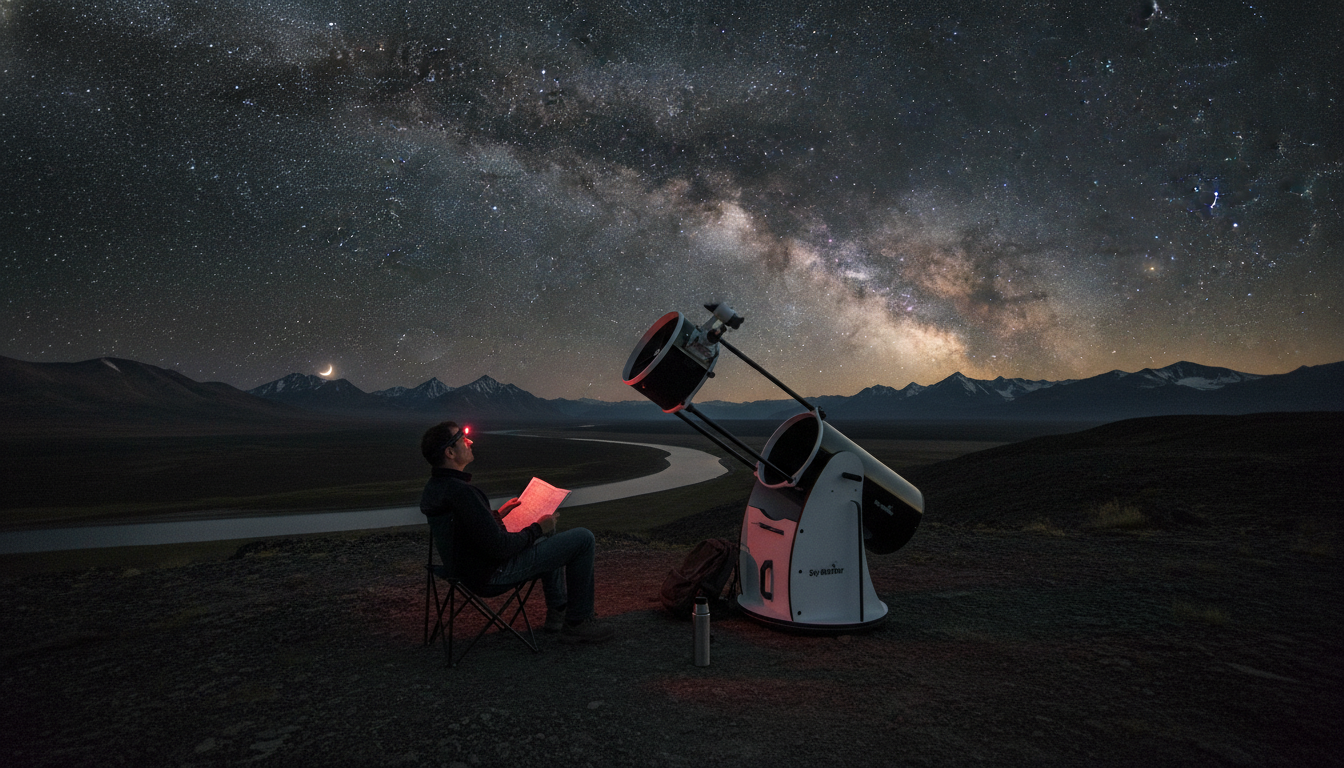
A 10-inch Dobsonian has a well-earned reputation for showing faint deep-sky objects with a simple, stable mount. A collapsible tube adds a practical twist: easier storage and transport without giving up the classic Dobsonian strengths—fast setup, smooth manual tracking, and impressive light-gathering power. This guide breaks down what the collapsible design changes, what to expect at the eyepiece, and how to get the most out of a 10-inch model.
At its core, a Dobsonian is a Newtonian reflector optical tube paired with an alt-azimuth “rocker box” mount built for stability and simplicity. You point it by moving it up/down (altitude) and left/right (azimuth), which makes it intuitive for learning the sky and for quick observing sessions.
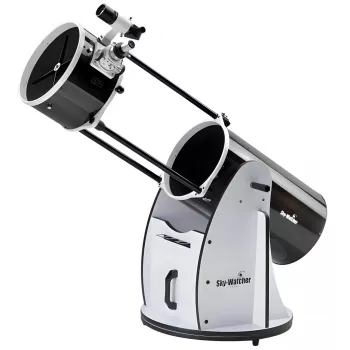
A collapsible Dobsonian shortens for storage and extends to its observing length, reducing bulk compared with a fixed-length solid tube of the same aperture. That “shorter when stored” profile is often the difference between a telescope that fits in a closet or trunk—and one that ends up staying home.
The best fit is anyone who wants large aperture but needs easier car loading, smaller closets, or less awkward carrying. The trade-offs are modest but real: collapsible designs can benefit from slightly more frequent collimation checks after transport, and they may need extra attention to stray light control compared with a fully enclosed tube.
The headline advantage is aperture. A 10-inch primary mirror gathers a lot of light, supporting brighter, more detailed views of nebulae, galaxies, and globular clusters—plus higher-resolution lunar and planetary observing when the atmosphere cooperates. If you’re shopping for that “wow” factor in visual astronomy, aperture is a big part of the equation.
Dobsonian mounts also have a distinct feel: smooth, hands-on motion that encourages star-hopping and learning constellations rather than relying on a complicated alignment routine. Paired with the collapsible tube, a 10-inch becomes more realistic to use frequently, especially for observers who drive to darker skies.
To see a current option, visit the 10″ Collapsible Dobsonian Telescope.
| Feature | Collapsible tube | Solid tube |
|---|---|---|
| Storage footprint | Shorter stowed length; easier to fit in closets and smaller vehicles | Longer tube can be bulky even when the base is manageable |
| Setup time | Still fast; extend tube and check alignment | Fast; fewer moving parts between sessions |
| Collimation sensitivity | Often benefits from quick checks after transport | May hold alignment slightly more consistently |
| Stray light and dew control | May need a shroud/light control in bright environments | Enclosed tube naturally blocks more stray light |
| Transport handling | Less awkward to lift and maneuver | Long tube can be harder on doorways and car trunks |
What shows up at the eyepiece depends on sky darkness, atmospheric steadiness (“seeing”), and your eyepiece choices. With a 10-inch mirror, the telescope has enough reach to make many classic objects genuinely engaging.
For object ideas and seasonal checklists, the NASA Night Sky Network is a reliable starting point.
Large mirrors deliver their best views when the optical system is aligned and thermally settled.
If you want a clear refresher on fundamentals like collimation and magnification, Sky & Telescope’s telescope basics is a solid reference.
For DIY tweaks—like making a simple light baffle or trimming thin sheet material for an observing accessory—having the right hand tool can help. A practical option to keep on hand is the Multifunctional Metal Sheet Cutting Scissor.
Not always, but it’s smart to check after transport. A quick verification with a cap, Cheshire, or laser takes about a minute and can restore sharpness and contrast, especially at higher magnification.
It can still be beginner-friendly because the mount is stable and intuitive. The main considerations are storage/transport, learning basic collimation, and having a simple observing plan with a finder and a few well-chosen eyepieces.
Reduced bulk for storage and vehicle loading while keeping the light-gathering power of a 10-inch mirror. Many owners end up observing more often because moving and setting up the telescope feels less like a project.




Leave a comment