
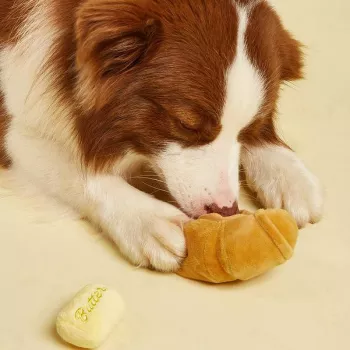
A food-themed squeaky toy adds a fun twist to everyday play while keeping dogs engaged through sound, texture, and an easy-to-grab shape. Whether your dog loves to sprint after a quick toss, carry a “snack” around the house, or pounce the moment they hear a squeak, food-shaped toys can turn short play windows into meaningful enrichment. Below, you’ll find what makes these toys so appealing, simple games that encourage better manners, and practical tips for choosing and caring for a squeaker toy safely. For more guidance, see Hidden Hazards: A Guide To The Potential Dangers Of Pet Toys.
Dogs get bored with “same old, same old,” and novelty is often the easiest way to refresh play without buying an entire new toy category. A food-shaped squeaky toy stands out visually and tactically, so many dogs investigate it like a brand-new find—even if they already own other squeakers. For further reading, see How to Pick the Best and Safest Dog Toys.
For safety fundamentals on toy selection, the American Kennel Club’s guidance is a helpful reference: American Kennel Club — Choosing Safe Dog Toys.
Squeaky toys can be more than chaos and zoomies. With a little structure, they become training tools that reinforce self-control and polite sharing.
If your dog tends to get “stuck” on squeaking, store the toy between sessions and use it like a special activity rather than an always-available item.
The best squeaky toy is the one your dog can engage with safely and comfortably. Size and chewing style matter more than novelty, especially for dogs who test seams and corners.
The ASPCA shares practical toy-safety reminders worth following for any chew item: ASPCA — Dog Chew Toy Safety Tips.
A squeaky toy should feel like a fun “activity,” not a set-it-and-forget-it chew for dogs who shred. A simple routine keeps play safer and helps the toy last longer.
| Dog type or situation | Why it works | How to use it safely |
|---|---|---|
| Gentle chewer | Enjoys carrying and squeaking without tearing | Leave out for supervised play; inspect weekly |
| Energetic retriever | Squeak adds motivation for fetch | Use short structured sets; store between sessions |
| Puppy (teething) | Encourages appropriate mouthing | Supervise closely; replace if damaged |
| Power shredder | May destroy quickly and expose parts | Use only under close supervision or choose a tougher alternative |
| Noise-sensitive household | Squeaker can be disruptive | Limit to daytime training games; consider non-squeak toys for evenings |
If you want a playful, easy-to-grab squeaker that stands out in the toy bin, the Food-Shaped Squeaky Dog Toy is built for quick interactive fun—toss, squeak, hide, and reward-based routines that keep dogs engaged without needing a long setup.
They’re generally safe when you choose the right size and supervise play. Inspect the toy frequently, and remove it right away if pieces start coming off or the toy becomes small enough to swallow.
The sound can trigger chase and prey-style play, which can ramp up arousal fast. Use structured sessions (short fetch sets, sit-before-toss, trades) and limit access if your dog struggles to settle.
Replace it as soon as seams split, inner parts become exposed, pieces go missing, or the squeaker housing is reachable. How quickly that happens depends on your dog’s chew intensity and whether play is supervised.



Leave a comment