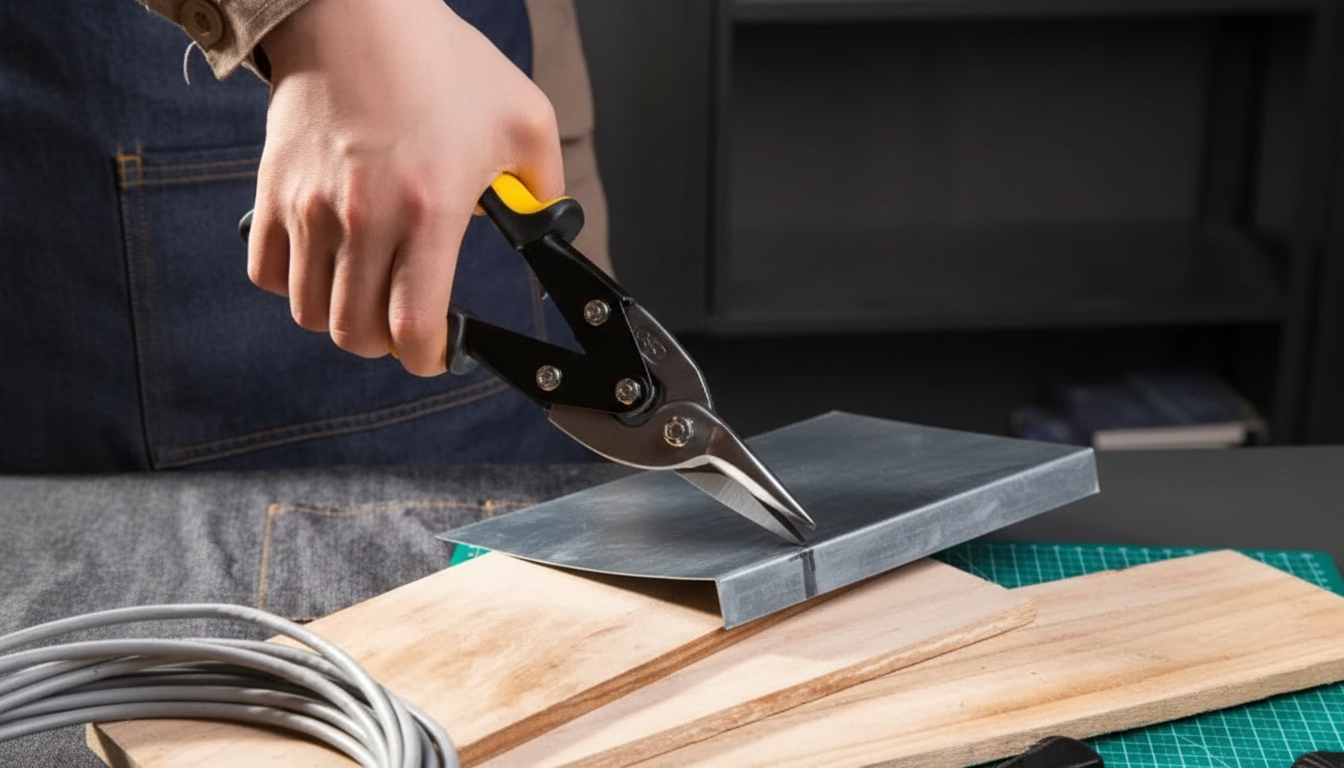
A reliable pair of metal-cutting scissors can simplify everything from quick home repairs to hobby projects. Multifunctional sheet-cutting scissors (often used like compact snips) are built for controlled trimming, shaping, and small adjustments—especially when a utility knife is risky and a saw is overkill. Below is a practical guide to what they’re designed to handle, which features actually make a difference at the workbench, and how to get cleaner cuts with fewer bends, burrs, and surprises.
What These Scissors Are Designed to Handle
These scissors are meant for trimming and shaping thin sheet materials where a knife can slip and a powered tool isn’t worth setting up. They shine in short, controlled cuts—think “fit and finish” work rather than slicing long strips across a full panel.
- Designed for thin stock where precision matters more than speed.
- Common use cases: HVAC patching, gutter and flashing adjustments, ductwork tweaks, metal crafts, model making, and general workshop cleanup.
- Best results typically come from thinner materials and shorter cuts rather than long rip cuts across large panels.
- Multifunction designs prioritize versatility: straight trimming plus controlled curves and corner work.
Key Features That Matter in Real Use
Not all metal-cutting scissors feel the same once they meet actual sheet stock. The differences show up in edge quality, hand fatigue, and whether the tool tracks a line or “walks” off it.
- Blade material and edge geometry: Hardened blades resist dulling, while a well-shaped edge reduces snagging and jagged edges.
- Leverage and handle comfort: Longer handles and ergonomic grips reduce hand strain during repeated cuts.
- Grip on the workpiece: Designs that reduce slipping help maintain accuracy and lower the chance of sudden tear-out.
- Control for curves: A stable pivot and well-aligned blades make it easier to steer through arcs and corners.
- Durability basics: Sturdy pivot hardware and robust handle construction help the blades stay aligned over time.
Quick checklist before buying or using
| What to check |
Why it matters |
What to look for |
| Blade alignment |
Prevents binding and uneven cuts |
Blades meet evenly from heel to tip |
| Pivot tightness |
Improves control and cut quality |
No wobble; smooth open/close action |
| Handle comfort |
Reduces fatigue and improves safety |
Secure grip; no sharp edges on handles |
| Material thickness |
Avoids damage and kickback |
Tool matches the sheet gauge being cut |
| Workholding plan |
Keeps hands clear of sharp edges |
Clamps/vice available; stable surface |
Best Materials and Typical Project Scenarios
Hand shears are a natural fit for thin, manageable pieces. They’re especially handy when you need a controlled trim line, a small notch, or a quick adjustment before fastening.
How to Get Cleaner Cuts (Without Warping the Sheet)
- Mark and support: Use a clear cut line and support the sheet close to the cut so it doesn’t vibrate or “oil-can” as the blades advance.
- Start with a small bite: Short, controlled squeezes help the blades track the line instead of drifting.
- Let the tool do the work: Avoid twisting the scissors. If the cut needs to curve, steer the sheet—don’t torque the handles sideways.
- Manage offcuts: Keep the scrap side free so it can curl away without tearing the good edge. If the offcut binds, pause and reposition.
- Deburr after cutting: A quick pass with a file or abrasive pad removes sharp burrs and helps parts fit flush. For more on surface prep concepts, see 3M’s metalworking guidance: https://www.3m.com/3M/en_US/metalworking-us/.
Safety and Handling Essentials
- Wear eye protection: Metal slivers and snapping offcuts can travel unexpectedly. Reference: NIOSH eye safety guidance.
- Use cut-resistant gloves: Freshly cut edges are extremely sharp. Reference: OSHA hand protection.
- Secure the workpiece: Clamp the sheet or use a vise to keep the cutting path stable and your hands away from the line of cut.
- Mind finger placement: Keep fingers behind the cutting path and clear of closing blades and sharp edges.
- Dispose of offcuts safely: Curled strips can puncture trash bags and hands—collect and contain them promptly.
Care, Storage, and When to Replace
Product Snapshot
- Multifunctional Metal Sheet Cutting Scissor designed for controlled cutting and shaping of thin sheet materials.
- A practical add-on for a home toolbox, craft station, or light workshop setup where quick trimming matters.
- Suitable for small repairs and DIY projects that benefit from hand-controlled cuts.
More In-Stock Picks
FAQ
What thickness of sheet metal can these scissors cut?
Cutting capability depends on the metal type and the tool’s design, but results are typically best on thin sheet ranges. Test on a scrap piece first, and avoid thick or hardened metal that can chip blades or throw the pivot out of alignment.
How can cleaner edges be achieved without bending the sheet?
Clamp and support the sheet close to the cut line, take shorter bites, and steer the sheet instead of twisting the scissors. Keep the offcut free to curl away, then deburr lightly to remove sharp edges.
Do metal-cutting scissors need maintenance?
Yes—wipe off metal dust after use, add a small drop of oil at the pivot, and store the tool dry and closed. If the pivot won’t stay tight, blades look misaligned, or cuts remain jagged despite good technique, it may be time to service or replace them.
Recommended for you





Leave a comment